Symmetric routing
Inbound and outbound traffic share the same protection path, with visibility in both directions at your network boundary.
 On Premise
Run XDP / eBPF filtering on your own Linux infrastructure. Deploy with symmetric or asymmetric routing while keeping control of your hardware, traffic and policy.
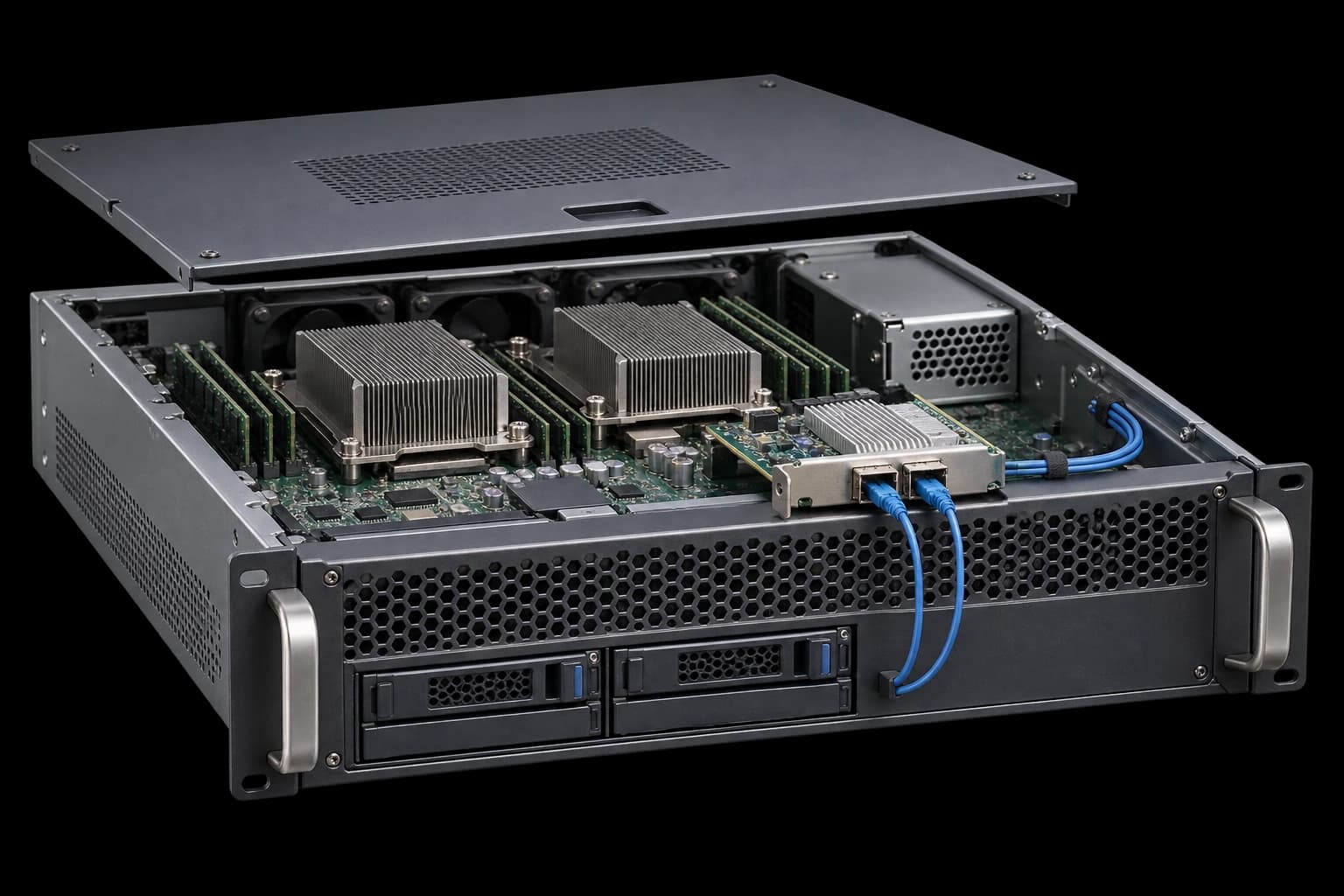
Local traffic filtering
XDP evaluates packets early in the Linux receive path. Unwanted traffic is dropped before the full network stack; accepted traffic continues to your services.
Filtering is configured for your services and traffic profile. An external tunnel is not a prerequisite for local enforcement; placement and operational boundaries are planned around your own network.
Routing options
We use your existing traffic flow to define the right placement and filtering policy.
Inbound and outbound traffic share the same protection path, with visibility in both directions at your network boundary.
Inbound traffic is filtered through the protection path while return traffic can take a different route. Filtering policy is configured for the available traffic visibility.
Before deployment
Performance depends on your NIC, driver, kernel, hardware and selected policy. We review compatibility and capacity together before deployment.
We review your network card, queue support, driver and XDP compatibility.
Capacity is planned around packet rate, connection tables and the filters you enable.
Define traffic direction, services, trusted paths and failover expectations with our team.
Potentially, after a compatibility review. We assess your Linux kernel, NIC model, driver, CPU and memory alongside the traffic profile. Filtering capacity is confirmed from that assessment.
Local filtering drops attack traffic once it reaches your hardware. It cannot recover an upstream link that is already saturated. If attacks may exceed your ingress capacity, consider Remote Protection or protected IP Transit alongside the local deployment.
We start with platform and traffic assessment, then agree on placement, routing and filtering policy. Installation and production cutover are coordinated with your team, with operational handoff and upgrade scope defined together.
Share your hardware, traffic profile and routing model. We’ll work with your team on a suitable On Premise deployment.